Verified snapshot
The facts that anchor this dossier
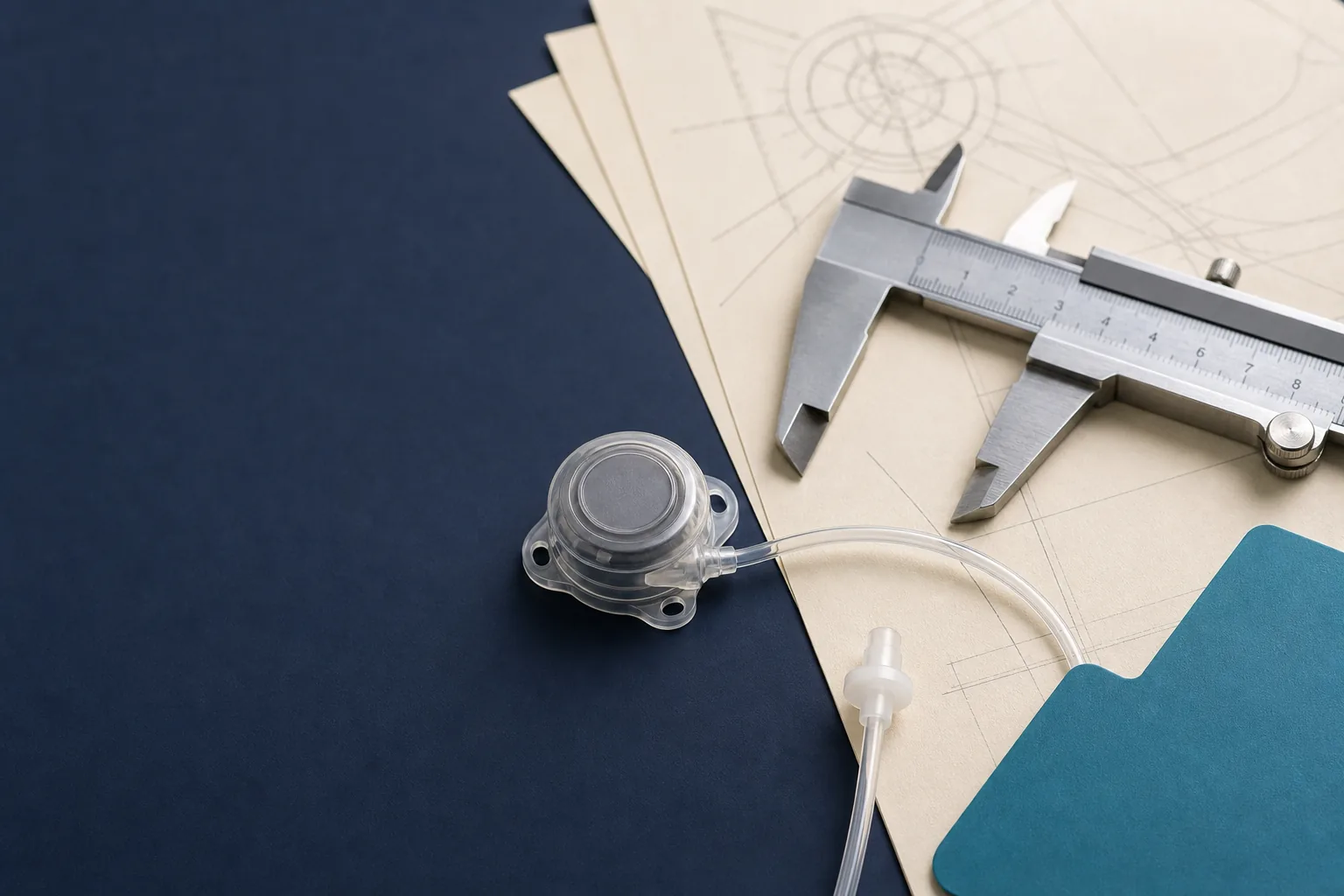
Implanted ports make repeated treatment possible without repeated peripheral needle access. MDL 3081 concerns allegations that certain Bard catheter materials can degrade, fracture, migrate, or contribute to infection, and the docket is now in active bellwether proceedings.
- Federal proceeding
- MDL 3081
- Actions pending
- 3,734
- Centralized
- August 8, 2023
- Core allegations
- Fracture, migration, infection, thrombosis
- Bellwether posture
- First trial preparations underway in 2026
District of Arizona before Senior Judge David G. Campbell.
JPML inventory as of August 3, 2026, against 3,980 historical actions.
The JPML transferred an initial ten actions and noted 38 potential tag-alongs.
Allegations are contested and are not findings about every Bard port.
A March 2026 order addressed final-pretrial work for the Cook bellwether and later cases.
Documented chronology
How the litigation reached this point
FDA cleared a special 510(k) for a Bard PowerPort with Groshong catheter; the instructions include power-injection pressure, flow, and verification warnings.
Bard PowerPort with Groshong Catheter 510(k) K081311 ↗FDA posted Class II recalls for certain PowerPort ClearVUE products. Recall scope is model- and lot-specific and should not be generalized to all ports in the MDL.
FDA Recall Results for K063377 ↗FDA found Bard Power-Injectable Implantable Ports substantially equivalent under 510(k) K181446.
Bard Power-Injectable Implantable Ports 510(k) K181446 ↗The JPML centralized Bard implanted port catheter actions in Arizona, identifying shared allegations involving catheter material integrity, fracture, migration, infection, and thrombosis.
MDL 3081 Initial Transfer Order ↗The court selected six cases and one alternate for Bellwether Group 1, making clear that the selections were intended for case-specific discovery and possible trials.
MDL 3081 Case Management Order No. 35 ↗Case Management Order 46 addressed final-pretrial preparations for the Cook bellwether, kept a thrombus case in the pool, and set additional expert-motion planning.
MDL 3081 Case Management Order No. 46 ↗The JPML listed 3,734 pending actions and 3,980 historical actions in MDL 3081.
Pending MDL Dockets by Actions Pending, August 3, 2026 ↗Why an implanted port is used
A totally implantable venous access port has a reservoir placed under the skin and a catheter that reaches a central vein. It can spare a patient from repeated peripheral IV placement during chemotherapy, infusions, blood draws, apheresis, or other long-term therapy. Some Bard PowerPort systems are also cleared for power injection of contrast when the correct access needle, pressure, and flow conditions are used.
The port and the catheter are different parts of one system. The reservoir is accessed through the skin, and the catheter carries fluid into the circulation. A problem can arise at the connection, along the catheter, at the tip, or in the surrounding vein. Port dysfunction can reflect a mechanical issue, a clot, malposition, or an access problem, which makes a chart notation such as 'won't flush' a starting clue rather than a diagnosis.
FDA clearance addresses substantial equivalence at the time of review, and a recall covers a defined model or manufacturing issue. Connecting a patient record to that regulatory history requires the exact model, reference number, catheter material, implant date, and lot information where available. Anything less is inference.
What plaintiffs allege and defendants contest
The JPML's August 2023 order says the centralized actions share allegations that the catheter component contains a concentration of barium sulfate that reduces material integrity and can lead to infection, fracture, migration, and thrombosis. It also identified common questions about design, testing, monitoring, adverse-event reporting, and warnings. The order reports the allegations so it can decide whether cases share facts; it does not adopt them as true.
Port-catheter fracture and migration are recognized medical events well beyond this litigation. A published series of 73 fractures across several brands found that most occurred near the port-catheter connection, with difficulty injecting as a common presentation, and case reports describe fragments migrating into the heart or pulmonary artery. That literature establishes the event as medically real and worth evaluating. The MDL's product-specific material theory is a further claim, and each individual fracture has its own cause.
FDA's MAUDE database also contains Bard reports describing fracture and migration. MAUDE is a signal-detection system. Manufacturers, clinicians, patients, and lawyers can all submit reports, and FDA cautions that the database establishes neither incidence nor causation. It identifies reported event types, which is a different thing from the chance that a port will fail.
Where the bellwether program stands
MDL 3081 moved from centralization to a structured bellwether program. In May 2025, the Arizona court selected six cases, Miller, Cook, Hicks, Divelbliss, Lattanzio, and Sorensen, plus James as an alternate. A later order set the anticipated trial sequence. The pool spans different asserted event types, so the process can test recurring evidence rather than treat one event as representative of the whole docket.
By March 2026, CMO 46 was addressing exhibit sealing, deposition designations, motions in limine, and courtroom access for the Cook trial. It also noted that Miller was one of only two thrombus cases in the pool and that Divelbliss was a fracture case. Pretrial detail at that level marks active litigation, at a stage where liability and damages remain open.
The current JPML report lists 3,734 pending actions out of 3,980 historical actions. A bellwether verdict, when it arrives, will resolve the selected case under its own evidence and governing law. It will inform the parties about recurring proof, and it will set no automatic value for thousands of other cases.
Building a reliable device chronology
The operative report, implant card, explant report, and hospital supply record can identify the port and catheter. Imaging may show tip position, fracture, migration, thrombosis, extravasation, or a retained fragment. Interventional-radiology notes explain what clinicians observed during removal or retrieval. Culture results and infectious-disease records matter when infection is alleged. Oncology records can explain why the port was still needed and whether therapy could continue through another route.
Symptoms and timelines vary widely. Difficulty flushing or drawing blood, pain near the port, fever, and arm or neck swelling all deserve medical evaluation, and chest pain or shortness of breath can be urgent. A catheter, a blood clot, an infection, and the cancer treatment itself can each produce overlapping symptoms, and only the clinical record separates them.
For litigation tracking, use the District of Arizona's case-of-interest repository and the signed PDF orders rather than a trial date copied onto a marketing page. Personal legal questions need product proof and state-specific timing rules reviewed together. An implanted Bard port and a reported complication are two facts. Eligibility is a legal conclusion that requires more.
Reader questions
Frequently asked questions
Are all Bard PowerPorts recalled?
No. FDA recall entries identify particular products, reference numbers, lots, reasons, and dates. A recall tied to one group cannot responsibly be applied to every Bard port or every product named in MDL 3081.
Does a MAUDE report prove that a port caused an injury?
No. MAUDE reports are unverified surveillance inputs and cannot establish incidence or causation. They may justify investigation, but the medical and device records control an individual assessment.
What does a bellwether selection mean?
It means the court selected an individual case for focused discovery and possible trial. It does not certify a class, guarantee a trial, or set a payout for other plaintiffs.
Is a hard-to-flush port proof of catheter fracture?
No. Occlusion, tip position, access technique, thrombosis, and mechanical damage are among several possibilities. Clinicians use examination and imaging or other testing to determine the cause.
Has MDL 3081 announced settlement amounts?
The primary court and JPML sources reviewed here do not provide a public global payment grid or universal claim deadline.
Primary-source file
Documents used for this dossier
- The JPML report supplies the pending and historical action counts shown on this page.Pending MDL Dockets by Actions Pending, August 3, 2026U.S. Judicial Panel on Multidistrict Litigation · accessed
- The JPML centralized Bard implanted port-catheter actions as MDL 3081 in August 2023.MDL 3081 Initial Transfer OrderU.S. Judicial Panel on Multidistrict Litigation · accessed
- The District of Arizona's litigation repository is the court record for MDL 3081.Bard Implanted Port Catheter Litigation RepositoryU.S. District Court, District of Arizona · accessed
- The court's case-management order governs the stage of the proceeding described here.MDL 3081 Case Management Order No. 35U.S. District Court, District of Arizona · accessed
- The court's case-management order governs the bellwether work described here.MDL 3081 Case Management Order No. 46U.S. District Court, District of Arizona · accessed
- The 510(k) record defines the cleared intended use of Bard power-injectable implantable ports.Bard Power-Injectable Implantable Ports 510(k) K181446U.S. Food and Drug Administration · accessed
- The PowerPort with Groshong catheter 510(k) record defines that device's cleared intended use.Bard PowerPort with Groshong Catheter 510(k) K081311U.S. Food and Drug Administration · accessed
- FDA's recall results record a recall action for the identified device.FDA Recall Results for K063377U.S. Food and Drug Administration · accessed
- Published research examined mechanisms of failure in totally implantable central venous access systems.Mechanisms of Failure of Totally Implantable Central Venous Access SystemsPubMed / World Journal of Surgery · accessed
Last source review: . If a source document and this summary differ, rely on the source document and send us a correction.