What matters most
Key takeaways
- The JPML centralized Bard implanted port-catheter actions in August 2023; the transfer order listed contested allegations, not established defects.
- The District of Arizona moved selected cases through discovery and toward bellwether trials in 2026, but a scheduled trial is not a verdict or settlement.
- FDA recalls apply to exact products, codes, and lots. A PowerPICC recall cannot responsibly be presented as a recall of every implanted PowerPort.
- The July 2026 federal inventory does not publish a universal claims deadline, eligibility test, or settlement value.
Before 2023: a broad product family and specific regulatory records
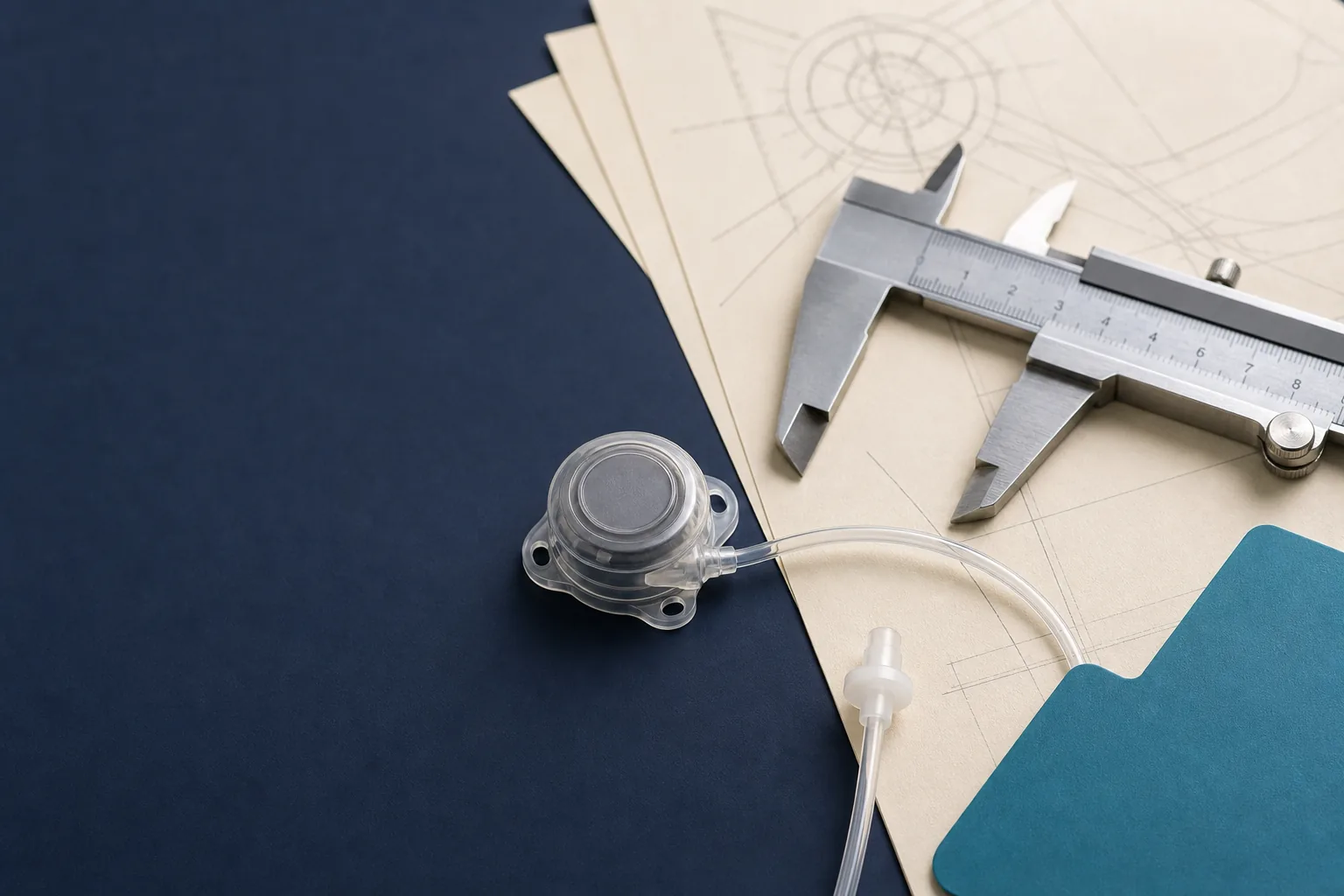
An implanted venous access port places a reservoir beneath the skin and connects it to a catheter terminating in a central vein. Ports can support chemotherapy, fluids, nutrition, blood products, blood draws, and power injection when the exact model is cleared and labeled for it. Bard's product family includes different reservoirs, catheter materials, connectors, and configurations. FDA 510(k) files document particular models and intended uses; they do not make all Bard vascular-access products interchangeable.
Known complications described in labeling and medical literature can include infection and thrombosis, occlusion, and fracture with migration or embolization. A listed complication establishes that an event is clinically possible. It does not determine whether a design was defective or why one port failed. Those questions depend on the exact device, placement, anatomy, care history, imaging, and condition of any removed components.
August 2023: MDL 3081 is centralized in Arizona
On August 8, 2023, the JPML transferred an initial group of Bard implanted port-catheter actions to the District of Arizona. The panel identified shared allegations involving catheter material integrity, degradation, fracture, migration, infection, thrombosis, and related warnings. Bard and related defendants can contest those allegations. The order created coordinated pretrial proceedings; it did not recall a product, find a defect, or certify a class.
Scope is central. An implanted PowerPort is not the same device as a peripherally inserted central catheter, or PICC, even when both carry Bard branding and may use the word 'Power.' The implant card, operative report, UDI, catalog number, and lot information are the reliable way to identify a device. A page that uses a recall involving one catheter category as proof about another has skipped the most basic product-identification step.
2024-2025: common discovery becomes a bellwether sequence
The Arizona court developed common discovery and a pool of selected cases for closer examination. Case Management Order 35 identified representative cases and alternates for bellwether work. Later scheduling placed cases with different alleged event types into an anticipated trial sequence so the parties could test recurring evidence. Bellwether selection concentrates resources on a sample; it does not validate the selected plaintiff's allegations or assign a value to the rest of the docket.
Case Management Order 38, entered in 2025, listed an anticipated sequence beginning with Robert Cook on March 2, 2026, followed by Wanda Miller on April 27 and May Lattanzio on July 7. Court calendars can change because of dispositive rulings, settlement, continuance, or later orders. The accurate statement is that the court scheduled trial work. Whether each listed trial occurred, and what it produced, is a separate question for the docket.
2026: detailed trial preparation, separate product news
A March 20, 2026 order addressed final-pretrial subjects for the Cook bellwether, including exhibits, deposition designations, motions in limine, possible bifurcation, and courtroom access. It also distinguished cases in the pool by alleged event type. That level of detail shows active litigation and a mature pretrial record. It does not tell readers who prevailed, whether a trial was completed, or whether common settlement terms exist.
During the same period, FDA classified a recall involving certain Bard PowerPICC intravascular catheters after reports of material-fatigue leaks tied to a catheter-resin issue. Those are PICCs, not implanted port reservoirs with catheters. FDA also maintains older, lot- or component-specific port recall records. Each recall must be quoted by exact device, reason, date, and scope. Brand proximity is not evidence that all products named in MDL 3081 were recalled.
The July 2026 posture and a reliable personal chronology
JPML's July 1, 2026 report listed 3,564 pending actions in MDL 3081 and 3,784 historical actions. The count is a federal docket snapshot. It does not show how many actions have complete product proof, what alleged complication each involves, or how any nonpending action ended. The official Arizona repository and signed orders are the sound sources for later developments; a copied marketing-page date can quickly become stale.
An individual chronology should include the implant card and UDI, the operative and supply records, and the access history through imaging, cultures, and any fragment-retrieval note. If a device is removed, preservation may allow examination through appropriate medical and legal channels. Patients should not request elective explant for litigation. Clinical concerns belong with treating professionals; legal assessment separately requires product, causation, state-law, and timing analysis.
Reader questions
Frequently asked questions
When did Bard port MDL 3081 begin?
The JPML centralized the federal implanted port-catheter cases on August 8, 2023, in the District of Arizona.
Does a scheduled bellwether date mean a trial was completed?
No. Schedules can change. A later signed order or docket entry is needed to confirm whether a trial began and how it ended.
Was every Bard PowerPort recalled?
No. FDA recall records identify exact products, codes, lots, and reasons. The sources reviewed do not show a recall of every implanted Bard port.
Is the PowerPICC recall proof about implanted ports?
No. A PICC and an implanted port are different device categories. Evidence must be matched to the exact model involved.
Primary-source file
Documents and research used
- The JPML centralized Bard implanted port-catheter actions in August 2023, listing contested allegations rather than established defects.MDL 3081 Initial Transfer OrderU.S. Judicial Panel on Multidistrict Litigation · accessed
- The District of Arizona's litigation repository is the court record for MDL 3081.Bard Implanted Port Litigation RepositoryU.S. District Court, District of Arizona · accessed
- The court's case-management order governs the stage of MDL 3081 described here.MDL 3081 Case Management Order No. 35U.S. District Court, District of Arizona · accessed
- The court's case-management order governs the bellwether work described here.MDL 3081 Case Management Order No. 38U.S. District Court, District of Arizona · accessed
- The court's case-management order sets the trial scheduling described here.MDL 3081 Case Management Order No. 46U.S. District Court, District of Arizona · accessed
- The PowerPort 510(k) record defines the device's cleared intended use and labeled complications.Bard PowerPort 510(k) K081311U.S. Food and Drug Administration · accessed
- FDA's recall communication concerns PowerPICC products, which are distinct from the implanted ports at issue.Bard PowerPICC Recall CommunicationU.S. Food and Drug Administration · accessed
- The JPML's July 1, 2026 report supplies the current dated federal action count for MDL 3081.Pending MDL Dockets, July 1, 2026U.S. Judicial Panel on Multidistrict Litigation · accessed