What matters most
Key takeaways
- FDA-cleared Bard port labeling lists complications including catheter fracture, embolism, migration, infection, thrombosis, and extravasation; a listed risk is not proof of a defect in one device.
- MDL 3081 concerns implanted port-catheter products, not every Bard vascular-access device and not the separately recalled PowerPICC products.
- Product model, catheter material, implant technique, location of failure, imaging, explant findings, and preservation are central to causation analysis.
- The federal MDL had moved into bellwether trials by 2026, but an individual trial result does not set a universal settlement value or prove every claim.
What an implanted port is, and what this MDL covers
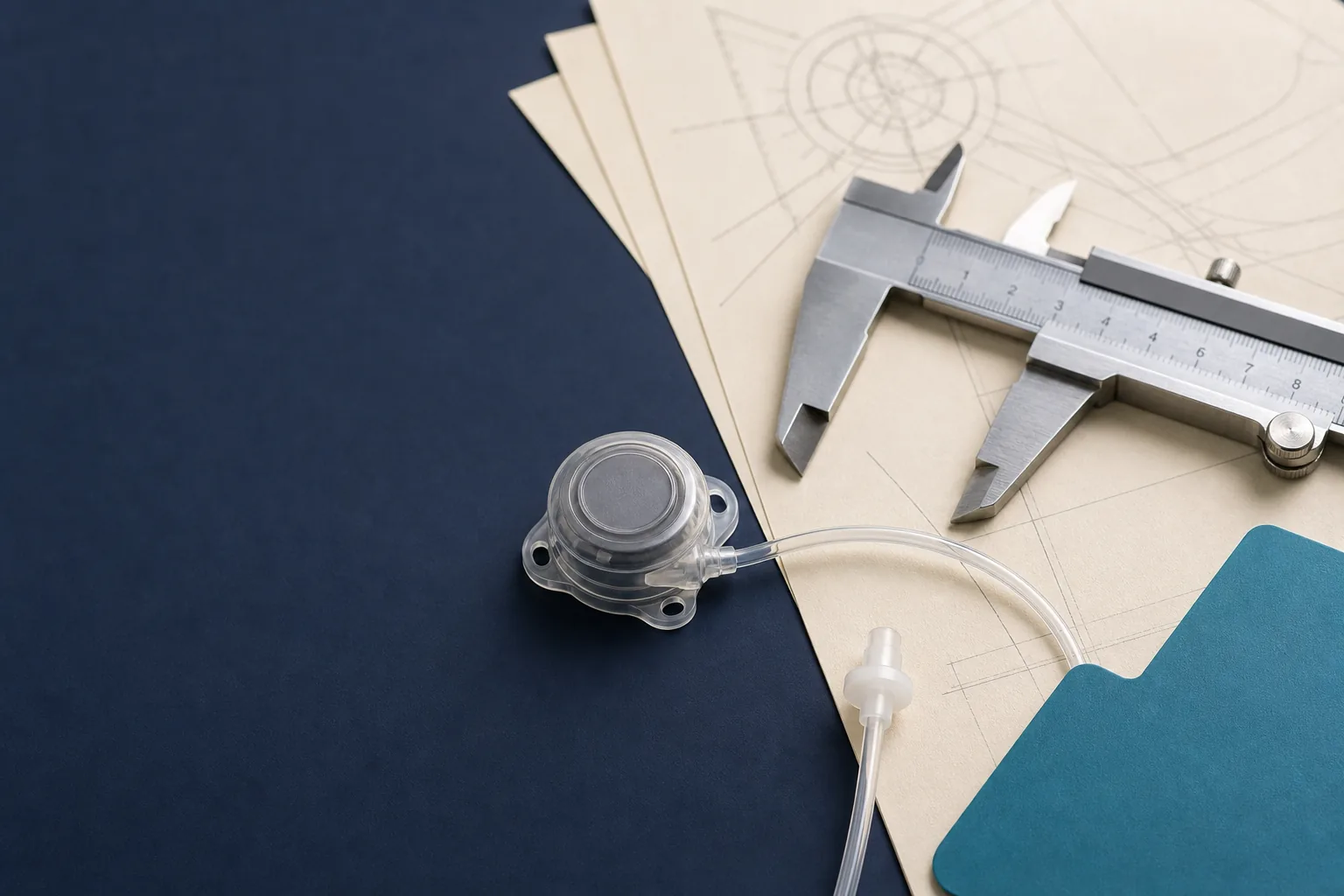
An implanted venous access port places a reservoir under the skin and connects it to a catheter terminating in a central vein. It can support chemotherapy, fluids, nutrition, blood products, blood draws, and power injection depending on the model. The JPML created MDL 3081 in August 2023 for federal actions sharing allegations about Bard implanted port-catheter products. Plaintiffs allege that catheter materials can degrade, fracture, migrate, or contribute to other complications; Bard disputes defect and causation.
Product scope matters. A chest PowerPort, arm port, PowerPICC, and midline catheter are not interchangeable devices. The 2025-2026 FDA recall involving certain Bard PowerPICC catheters concerned peripherally inserted central catheters and material-fatigue leaks; it should not be presented as a recall of every implanted PowerPort in MDL 3081. The implant card, operative note, UDI, catalog number, and lot are the starting point for knowing which evidence applies.
Known complications do not answer the defect question
FDA 510(k) records and manufacturer labeling for Bard PowerPort systems list possible complications such as catheter fracture, migration, and occlusion, along with infection and thrombosis. Medical literature likewise documents rare fracture and migration events with totally implantable venous access systems from multiple manufacturers. Recognition of a complication establishes that an event is clinically possible; it does not identify why a particular catheter failed.
Potential explanations can include pinch-off between anatomical structures, placement technique, and dwell time, alongside patient anatomy and material behavior. Plaintiffs in MDL 3081 advance product-specific degradation theories, while defendants may argue alternative mechanisms and accepted risks. Reliable analysis matches the fracture surface, location, imaging, procedure history, and material to the proposed mechanism.
What FDA recall records can and cannot prove
FDA's recall database shows specific Bard port recalls, including a 2019 action involving selected lots packaged with an incorrect tunneler component. That recall addressed identified product codes and lots and a risk of prolonging surgery. It did not announce that all PowerPort catheters were defective or confirm the material-degradation allegations in MDL 3081. Recall scope, reason, lot, and status must be quoted exactly.
The separate PowerPICC action announced in 2025 and classified by FDA as Class I in January 2026 involved certain 4 French single-lumen PICCs and an increase in material-fatigue leaks associated with a catheter-resin issue. FDA reported 10 serious injuries in that communication. It is useful evidence about those recalled PICCs, not automatic evidence about an implanted port model. Similar brand language is not a substitute for matching a UDI or catalog number.
Where MDL 3081 stood in 2026
The District of Arizona developed common discovery, expert proceedings, and a bellwether sequence. An August 2025 case-management order listed trials for Robert Cook beginning March 2, 2026, Wanda Miller beginning April 27, and May Lattanzio beginning July 7. A March 20, 2026 order addressed final-pretrial details for Cook. These dated orders show that the litigation reached trial testing rather than remaining at initial pleading stage.
A planned trial can settle, continue, end in a verdict, or change by later order, so the schedule alone should not be reported as an outcome. Each bellwether turns on a selected product, medical history, experts, and alleged failure. Even a completed verdict would inform the parties without binding thousands of other plaintiffs. Official sources reviewed through July 10, 2026 do not publish a universal settlement matrix, claims deadline, or guaranteed value.
The evidence file that can distinguish a claim
A complete file includes the implant card and UDI, placement operative report, access and flushing history, imaging before and after symptoms, notes documenting resistance or inability to draw blood, infection and culture records, thrombosis studies, removal or retrieval operative report, photographs, and pathology or materials analysis. Imaging can show migration or fracture location; an explant can permit examination if preserved through appropriate medical and legal channels.
Symptoms such as pain, swelling, infusion difficulty, fever, or shortness of breath require medical evaluation, not web diagnosis. FDA advises reporting device problems through MedWatch, but a report does not determine legal causation. Patients should not request elective explant solely for litigation. Legal review must also address manufacturer identity, state-law timing, prior conditions, alternative mechanisms, and whether the exact model falls within pleaded MDL allegations.
Reader questions
Frequently asked questions
Are all Bard PowerPorts recalled?
No. FDA recall records identify particular products, codes, lots, and reasons. The reviewed sources do not show a recall of every implanted Bard PowerPort.
Is a PowerPICC the same as an implanted PowerPort?
No. A PICC is inserted through a peripheral vein and remains an external-access catheter; an implanted port has a reservoir under the skin. Device-specific evidence should not be mixed.
Does a catheter fracture prove a product defect?
No. Fracture is a documented complication, and material, placement, and dwell time must be evaluated before assigning a cause.
Has MDL 3081 announced a settlement amount?
The official sources reviewed through July 10, 2026 show bellwether trial work, not a universal public settlement program or payout grid.
Primary-source file
Documents and research used
- The JPML's monthly report supplies the dated federal action count for the Bard port catheter MDL.JPML pending MDLsU.S. Judicial Panel on Multidistrict Litigation · accessed
- The District of Arizona's case-management order governs the stage of MDL 3081 described here.MDL 3081 CMO 38U.S. District Court, District of Arizona · accessed
- The District of Arizona's case-management order governs the bellwether work described here.MDL 3081 CMO 46U.S. District Court, District of Arizona · accessed
- Bard PowerPort 510(k) materials record the device's clearance basis and labeled complications.Bard PowerPort 510(k) materialsU.S. Food and Drug Administration · accessed
- FDA's 2019 recall record documents a PowerPort recall action.2019 PowerPort recall recordU.S. Food and Drug Administration · accessed
- FDA's recall communication documents a Bard PowerPICC recall action.Bard PowerPICC recall communicationU.S. Food and Drug Administration · accessed
- Published case review examined implanted port fracture and migration.Implanted port fracture and migration case reviewPubMed / Indian Journal of Medical and Paediatric Oncology · accessed
- A systematic review compared arm and chest port placement outcomes.Arm versus chest port systematic reviewPubMed / Frontiers in Oncology · accessed